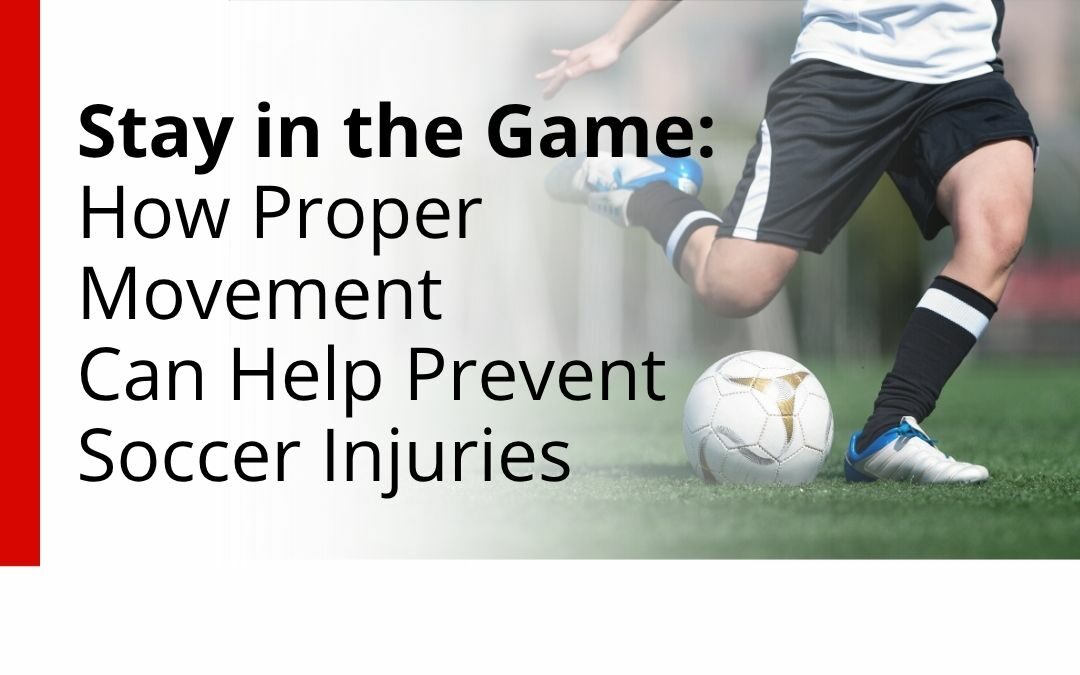
Soccer is one of the most physically demanding sports, requiring athletes to sprint, cut, pivot, jump, kick, and change direction in an instant. While these movements make the game exciting, they also place significant stress on the body. From foot and ankle pain to back discomfort and even concussions, injuries can interrupt a season and keep athletes off the field.
The good news is that many common soccer injuries aren’t simply the result of bad luck. The way your body moves—and how well your joints and muscles function together—can play a major role in both performance and injury prevention.
Movement Starts from the Ground Up
Every sprint, pass, and change of direction begins with the feet. Healthy foot and ankle mobility allows the body to absorb force efficiently while maintaining balance and stability. When the muscles and joints in the foot aren’t functioning properly, additional stress can be transferred to the knees, hips, and spine.
Conditions like plantar fasciitis, turf toe, and recurring ankle discomfort are common among soccer players because of the repetitive demands placed on these structures. Addressing mobility restrictions and improving strength throughout the foot and ankle can help athletes move more efficiently while reducing unnecessary strain during practices and games.
Don’t Overlook Hip Mobility
While the feet provide the foundation, the hips act as the engine that powers movement. One area that’s frequently overlooked is hip internal rotation—the ability of the hip to rotate inward during walking, running, and cutting movements.
Limited hip mobility often forces the body to compensate elsewhere. As a result, athletes may experience increased stress on the knees, lower back, or even the feet. Restoring proper hip motion can improve balance, stability, and overall movement quality while helping athletes generate power more efficiently on the field.
Rather than simply stretching tighter muscles, it’s important to improve how the hip joint functions as part of the body’s entire movement system.
Spine Health Supports Athletic Performance
The spine also plays a critical role in athletic movement. Soccer requires constant twisting, rotating, sprinting, and rapid changes in direction. If the joints of the spine aren’t moving well, athletes may experience stiffness, back pain, neck discomfort, or reduced mobility that affects performance.
Before beginning treatment, a thorough evaluation is essential to rule out serious injuries such as fractures or other structural damage. Once those concerns have been addressed, conservative care—including chiropractic adjustments, soft tissue therapies, and movement-based rehabilitation—may help restore mobility, improve function, and support a safe return to activity.
The goal isn’t simply pain relief—it’s helping the body move more efficiently so athletes can continue doing what they love.
Recovery Is Just as Important as Prevention
Not every soccer injury involves muscles and joints. Concussions remain one of the most serious injuries athletes can experience and require careful management.
Recovery looks different for every individual. Symptoms such as headaches, dizziness, fatigue, difficulty concentrating, and sensitivity to light or noise should never be ignored. Returning to play too soon can delay recovery and increase the risk of additional injury.
Concussion care often involves a team approach that may include physicians, athletic trainers, rehabilitation specialists, and other healthcare providers. As recovery progresses, gentle treatment may help address muscle tension in the neck and upper back while supporting overall comfort. Most importantly, athletes should only return to sport under the guidance of qualified healthcare professionals.
Keep Your Body Ready for the Season
Whether you’re a competitive soccer player, a weekend athlete, or simply someone who enjoys staying active, your body functions as one connected system. Restrictions in the feet, hips, or spine can influence movement patterns throughout the body, increasing the likelihood of discomfort and overuse injuries.
Regular movement assessments, addressing mobility limitations early, and seeking care when problems arise can help keep small issues from becoming bigger setbacks. By focusing on healthy movement, recovery, and injury prevention, athletes can stay stronger, perform with greater confidence, and spend more time doing what they enjoy most—playing the game.